

SOC 2 compliance has become a significant milestone for SaaS startups in Mumbai seeking trust and credibility with enterprise clients. Many founders in Mumbai often view it as a simple checkbox to achieve SOC 2 readiness—whether Type 1 or Type 2—but it is far more intricate than it appears.
Type 1 provides a snapshot of controls at a single point in time, whereas Type 2 evaluates operational effectiveness over several months, requiring sustainable processes and continuous evidence. For fast-growing SaaS startups in Mumbai, balancing security documentation, operations, and development can be particularly challenging.
The complexity lies not only in implementing the right controls but also in maintaining them consistently, coordinating across teams, and integrating audit requirements into fast-moving workflows. Understanding this hidden complexity helps Mumbai-based startups save time, reduce costs, and avoid unnecessary audit gaps while supporting long-term growth.
SOC 2 Type 1 vs Type 2: The Foundational Differences for Mumbai Startups
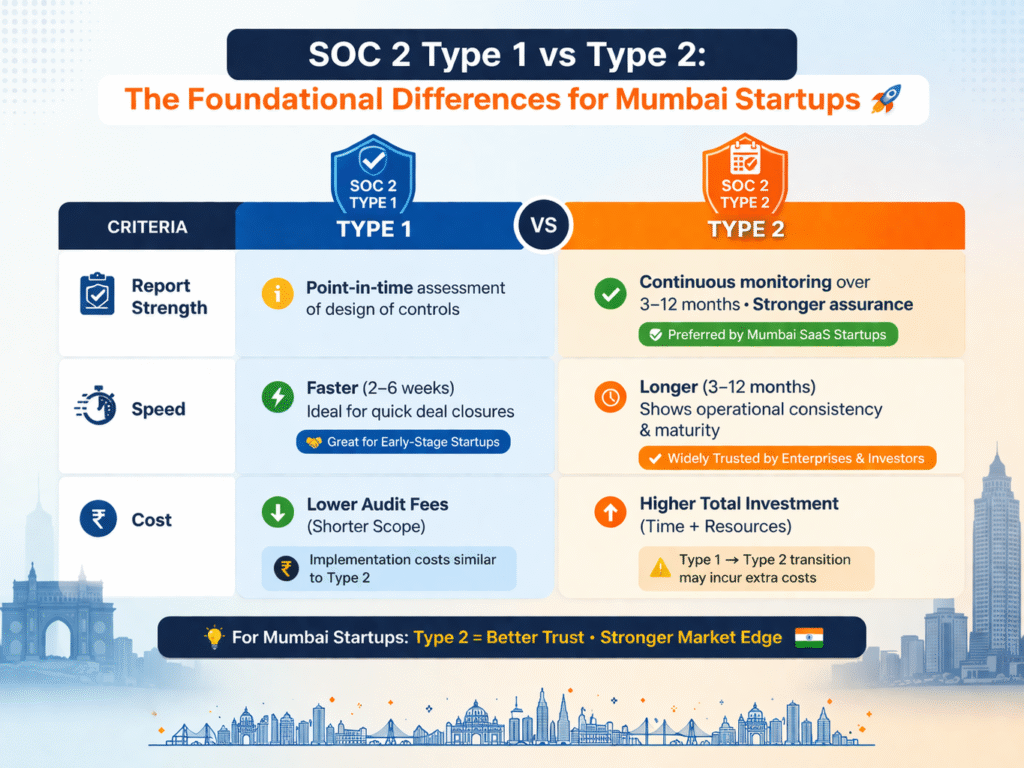
Report Strength
Type 2 provides a comprehensive view of the security posture by monitoring controls over time. This offers stronger assurance to stakeholders, especially for SaaS companies in Mumbai handling sensitive data. In contrast, Type 1 reflects controls at a single point in time with limited insight into ongoing effectiveness.
Speed
Type 1 audits are quicker and often preferred by Mumbai startups needing reports to close deals rapidly. Type 2 audits take longer (typically 3 to 12 months) but are widely accepted due to demonstrated operational consistency.
Cost
Type 1 audits are less expensive due to a shorter scope. However, implementation costs remain similar to Type 2, and many Mumbai startups incur additional costs when transitioning from Type 1 to Type 2 later.
Continuous GRC Scaling Adds Complexity in Mumbai SaaS Ecosystem
For SaaS startups in Mumbai, scaling governance, risk, and compliance (GRC) introduces operational challenges. As businesses grow, security policies, controls, and compliance processes must evolve alongside expanding infrastructure and increasing customer data.
Multi-tenant architectures, third-party integrations, and frequent product updates—common among Mumbai startups—make maintaining consistent risk management difficult. Without scalable processes, gaps can emerge, increasing audit risks and impacting client trust.
Effective GRC scaling requires policy standardization, automation, continuous monitoring, and embedding compliance into development workflows—ensuring Mumbai startups can grow without compromising compliance.
Vendor and Third-Party Risk Exposure in Mumbai
Vendor risk is one of the most overlooked challenges for SaaS startups in Mumbai undergoing SOC 2 implementation. Many rely heavily on cloud providers, payment processors, and third-party tools.
Auditors require clear evidence of vendor compliance, but startups in Mumbai often struggle to obtain proper documentation. While Type 1 focuses on a point-in-time assessment, Type 2 demands consistent vendor compliance over months.
Failure to manage this risk can delay audits, expose sensitive data, and weaken trust with enterprise clients in Mumbai’s competitive market.
Burden of Evidence Collection for Mumbai Startups
Even with strong security controls, SaaS startups in Mumbai often struggle during audits due to poor evidence management—not weak systems.
Manual evidence collection leads to missing logs, fragmented records, and time-consuming audit preparation. For Mumbai-based teams operating at high speed, this becomes a major bottleneck.
Effective SOC 2 audits require structured, continuous evidence collection that demonstrates adherence to policies, procedures, and controls over time.

Organizational Change Adds Operational Complexity in Mumbai
SOC 2 implementation introduces significant organizational change for SaaS startups in Mumbai. Early-stage startups typically operate with flexible and informal processes, but SOC 2 requires structured policies and consistent execution.
This shift impacts development, DevOps, and administrative teams, requiring cross-functional coordination and training. For many Mumbai startups, leadership must balance compliance with growth, which can slow decision-making.
Embedding compliance into daily operations—such as access management, incident response, and monitoring—requires cultural and workflow adjustments.
Resource Pressure Builds Over Time in Mumbai SaaS Startups
SOC 2 implementation places continuous pressure on limited resources within Mumbai startups. As companies scale, the volume of logs, access requests, incidents, and policy requirements increases significantly.
Without automation, teams struggle to keep up, affecting product development timelines and increasing compliance risks. Over time, SOC 2 evolves from a one-time project into an ongoing operational responsibility for Mumbai-based organizations.
Strategies to Navigate SOC 2 Complexities Effectively in Mumbai
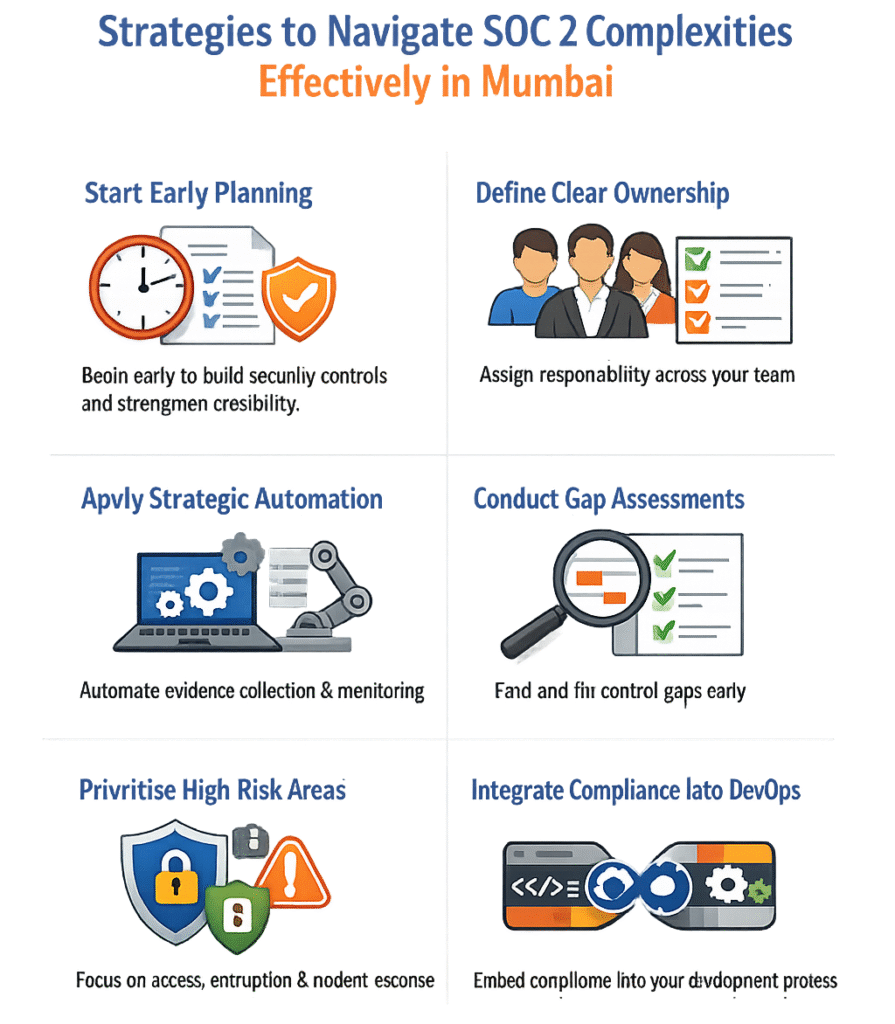
Start Early Planning
Mumbai startups that begin SOC 2 preparation early can integrate security controls into their foundation, avoiding costly rework later. Early compliance also strengthens credibility with clients and investors.
Define Clear Ownership
Assigning clear responsibilities across teams ensures accountability and consistent control management within Mumbai organizations.
Apply Strategic Automation
Automation of evidence collection, access reviews, and monitoring reduces manual effort and improves efficiency for SaaS startups in Mumbai.
Conduct Gap Assessments
Identifying control gaps early helps Mumbai startups avoid audit delays and ensures readiness from the beginning.
Prioritize High-Risk Areas
Focus on critical areas such as access control, encryption, and incident response to strengthen audit outcomes.
Integrate Compliance into DevOps
Embedding compliance into CI/CD pipelines ensures Mumbai startups maintain security without slowing development velocity.

Conclusion
Implementing SOC 2 compliance in SaaS startups across Mumbai and other Indian metros is not a one-time task—it is a continuous, disciplined process. At Matayo Solutions, we help Mumbai-based organizations build structured compliance frameworks that govern every aspect of their operations while maintaining audit readiness before attestation.
For startups in Mumbai—the financial capital of India—key challenges include vendor risk management, evidence collection difficulties, sustained resource pressure, and adapting to constant organizational change. Addressing these proactively ensures smoother audits, stronger client trust, and scalable growth.