
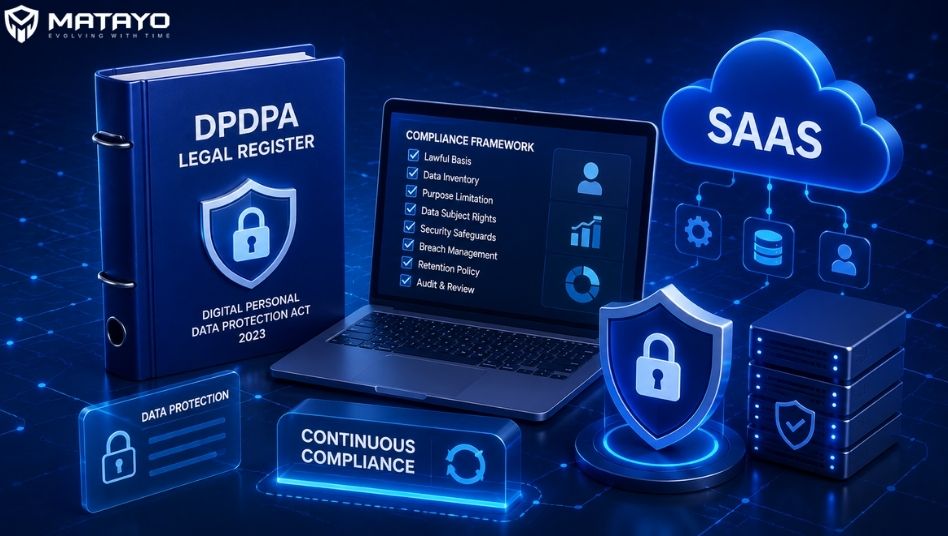
We need to recognize that India passed the Digital Personal Data Protection Act to reshape how software businesses handle individual customer data across cloud networks. Your software company must adopt compliance procedures now to avoid severe statutory penalties during standard operations.
India’s data privacy framework shifted from loose operational guidelines to strict statutory enforcement across all technology sectors. Modern buyers evaluate privacy protections thoroughly before signing enterprise software contracts with digital vendors. This makes compliance a core selling point. Demonstrating compliance gives software providers a clear marketplace advantage over competitors who neglect privacy obligations.
Understanding DPDPA
The Digital Personal Data Protection Act creates a modern statutory framework governing personal data processing across digital environments. The primary objective focuses on protecting individual privacy rights while permitting legitimate business processing activities. The law covers digital personal data processed within Indian territory alongside offline data converted into digital formats later. Statutory obligations apply directly to organizations offering goods or services to individuals located within India.
Personal data includes any information that identifies an individual directly or indirectly through connected data points. Digital personal data means personal information recorded or transformed into electronic form across cloud platform infrastructure.
Consent represents the baseline legal requirement for processing user data, requiring clear affirmative action from individual users. Processing covers operations including-
- Collection
- Recording
- Organization
- Storage
- Retrieval
- Use
- Disclosure
- Erasure of user records
Does DPDPA Apply to SaaS Companies?
Indian SaaS businesses operating within domestic borders must comply fully with all statutory obligations outlined in the law. Global SaaS firms serving users inside India fall directly under extraterritorial jurisdiction when handling Indian customer records. Multi-tenant SaaS architectures isolate shared database infrastructure, requiring strict logical separation across individual tenant environments.
B2B SaaS products handle client employee information, placing them under strict statutory compliance requirements during operational delivery. B2C SaaS applications collect personal details directly from individual subscribers, demanding explicit consent mechanisms at account setup. AI SaaS platforms ingest training prompts containing personal details, creating distinct compliance burdens during automated model processing.
HRMS platforms store employee bank details, tax records, and official identification documents throughout internal workplace workflows. CRM tools maintain buyer contact information, sales interaction logs, and pipeline activity data on continuous schedules. ERP systems aggregate organizational resource records containing personal details of staff, vendors, and external clients.
Healthcare SaaS applications process medical diagnostic files, treatment plans, and patient identity details under strict privacy controls. FinTech SaaS platforms handle payment transactions, banking information, and identity validation credentials for thousands of digital users.
Types of Personal Data Processed by SaaS Companies
Software platforms handle diverse categories of personal records across internal operations and client software environments:
Customer Data
Customer records include names, email addresses, payment profiles, and account settings stored inside main system databases.
Employee Data
Internal employee data encompasses tax numbers, salary details, home addresses, and performance files managed by human resources.
Vendor Data
Supplier information consists of contact names, billing addresses, direct phone numbers, and contract records maintained by procurement.
Prospect Data
Sales teams collect business email addresses, direct phone lines, job titles and company details during outreach campaigns.
Website Visitors
Web servers record IP addresses, browser configurations, operating systems, and geographic location tags during user site visits.
Support Tickets
Help desk systems retain user chat histories, issue descriptions, diagnostic attachments, and customer communication logs.
Usage Analytics
Telemetry tools track user clickstreams, feature adoption patterns, active account sessions, and software interaction times.
Cookies
Browser storage saves session authentication tokens, user setting preferences, tracking beacons, and login credentials across web sessions.
AI Prompt Data
Machine learning models ingest text inputs, query parameter strings, and context uploads that contain personal identifiers.
SaaS Data Lifecycle
Mapping information management workflows clarifies how customer records move through cloud systems from initial touchpoint to final destruction.
Lead
↓
Registration
↓
Authentication
↓
Subscription
↓
Collection
↓
Storage
↓
Processing
↓
Sharing
↓
Retention
↓
Deletion
- Lead: Marketing teams collect prospect email addresses and personal contact details through landing page form submissions.
- Registration: New users create application accounts by providing personal names, corporate email addresses, and account credentials.
- Authentication: Identity systems verify user sign-in attempts using multi-factor codes or federated identity provider services.
- Subscription: Billing software records credit card details, billing addresses, and payment transaction histories for active platform plans.
- Collection: Application servers gather active user inputs, system files, and automated activity logs during platform operational use.
- Storage: Cloud infrastructure stores application databases, uploaded files, and system backup archives inside protected server facilities.
- Processing: Application engines analyze raw user inputs, run database queries, and generate operational reporting outputs automatically.
- Sharing: Software integrations transmit user data to external sub-processors including transactional email services and payment processors.
- Retention: Software systems maintain active customer records according to statutory retention rules or active subscription agreement terms.
- Deletion: Background routines permanently purge stored customer data following account cancellation or explicit user data deletion requests.
Understanding Roles Under DPDPA
Defined statutory roles establish specific legal obligations across modern cloud software ecosystems:
- Data Principal: The individual person whose personal information gets processed within software applications (and who holds statutory privacy rights).
- Data Fiduciary: The enterprise entity deciding the explicit purposes and procedural means for processing personal customer data.
- Data Processor: The service entity handling personal data exclusively on behalf of a Data Fiduciary under strict contractual terms.
- Consent Manager: An independent entity registered with regulatory authorities that enables individuals to manage, grant or revoke consents easily.
- Data Processor vs Sub-processor: A Data Processor contracts directly with the Data Fiduciary. But a Sub-processor performs delegated tasks under Processor instruction.
When is a SaaS Company a Data Fiduciary?
A software company acts as a Data Fiduciary whenever it independently decides why and how personal data gets collected.
- Marketing: Planning audience segmentation rules and sending direct marketing emails makes the software provider accountable for user data.
- Website: Collecting visitor contact details on public website forms creates direct fiduciary responsibilities for the software business.
- HR: Managing staff benefits, payroll distribution, and performance records establishes fiduciary duties over internal staff records.
- Recruitment: Gathering applicant resumes and performing background checks requires software companies to protect candidate privacy directly.
- Customer Portal: Managing platform sign-up databases and credential storage places fiduciary accountabilities directly on the SaaS business.
- Cookies: Deploying tracking cookies to analyze visitor actions obligates software businesses to secure direct user consent beforehand.
- Analytics: Gathering platform usage statistics to refine features turns the software vendor into a Data Fiduciary over product telemetry.
When is a SaaS Company a Data Processor?
SaaS vendors function as Data Processors when processing customer information strictly according to client contractual directives:
- HRMS: Hosting worker details for enterprise clients means processing records strictly under employer customer instructions.
- CRM: Storing client sales leads means operating strictly as a data processor executing customer configuration settings.
- Payroll: Calculating wage deductions using client employee numbers constitutes pure data processor execution under enterprise service contracts.
- ERP: Hosting corporate resource datasets uploaded by external business clients represents standard processor operational activity.
- Accounting: Processing financial ledger records uploaded by business customers occurs under strict data processor obligations.
- Healthcare: Hosting electronic medical charts uploaded by health providers requires processing patient files under strict clinical client parameters.
Shared Responsibility Model
Legal obligations split across operational layers inside modern cloud delivery frameworks:
Customer
↓
SaaS
↓
Cloud Provider
↓
Third Parties
Customers maintain direct legal responsibility for acquiring lawful consent from end users before uploading personal data into application databases. SaaS platforms build security controls, manage user permissions, and ensure valid processing routines inside application software layers.
Cloud infrastructure providers secure physical hardware servers, data center premises, and core network connectivity against physical or digital threats. Third-party sub processors uphold strict contractual requirements when executing assigned tasks like transaction processing or automated email dispatching.
Common Myths
Misconceptions about legal responsibilities create major operational exposure for software leadership teams:
- Cloud Provider Manages Compliance: Infrastructure vendors secure physical servers, but protecting software databases remains your internal company duty.
- SaaS Owns Customer Data: Storing user records in cloud software never grants ownership rights to the service vendor.
- Privacy Policy Is Sufficient: Posting website notices fails to fulfill legal duties without operational technical safeguards.
- Security Equals Privacy: System encryption shields infrastructure against breaches, whereas privacy requires explicit user consent for data processing.
FAQs
What financial penalties can regulators impose for data breach failures under DPDPA?
Authorities can impose financial penalties reaching two hundred fifty crore rupees on software companies that fail to prevent security breaches or protect personal user records properly.
Does DPDPA prohibit SaaS platforms from storing personal data on foreign servers?
Platforms can transfer data abroad unless central authorities explicitly restrict specific country destinations through negative list notifications published in official gazettes.
How does DPDPA protect personal data rights when a user passes away?
Data Principals can nominate specific individuals who assume legal control over their personal records during unforeseen events like sudden death or incapacity.